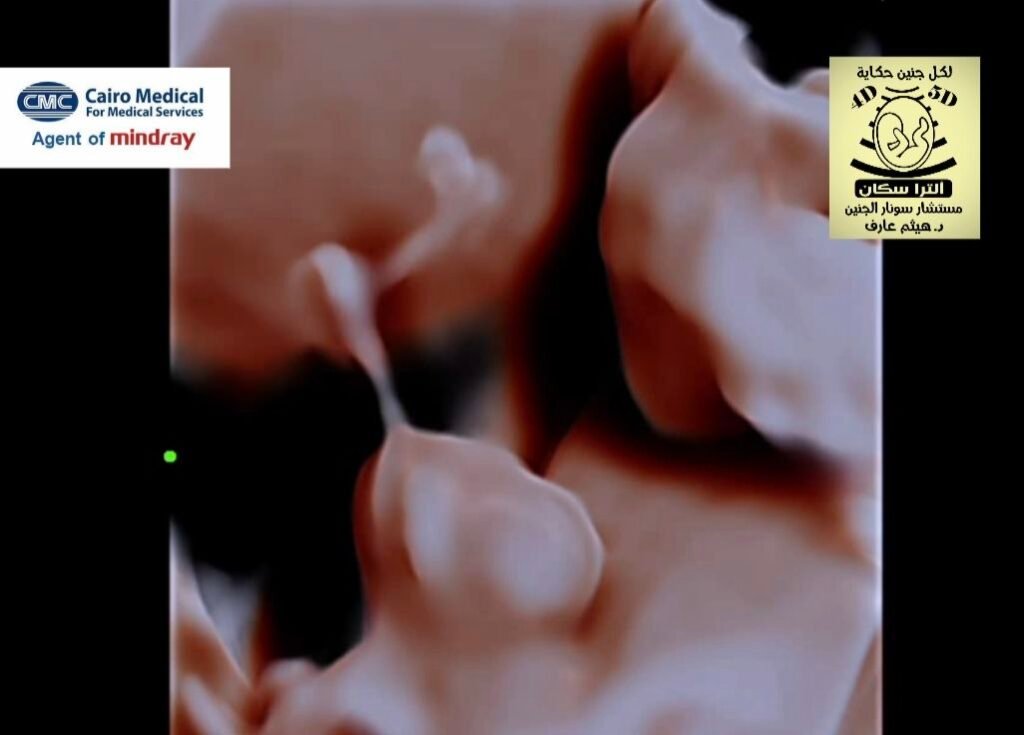

partial ectopia cordis with sternal cleft in pentalogy of Cantrell
By dr coskun umit from turkey based on my case from LinkedIn A striking late-presenting case: Pentalogy of
Cantrell at 25 weeksHere is a 25-week fetus with no previous anomaly screening, presenting for the first ultrasound examinationDetailed fetal assessment revealed findings highly suggestive of Pentalogy of Cantrell, within the spectrum of thoracoabdominal ectopia cordis.Pentalogy of Cantrell is a rare congenital disorder characterized by variable combinations of:. Supraumbilical abdominal wall defect (commonly omphalocele)• Lower sternal defect• Anterior diaphragmatic defect• Deficiency of the diaphragmatic pericardium• Intracardiac anomalies. often associated with abnorma cardiac position or ectopia cordisImportantly, the heart is not always completely outside the thorax as seen in this case, and the phenotvpe may vary considerably across the Cantrell spectrumAnother important message from this case: First-trimester ultrasound is not merely an aneuploidy scan. It is a critica opportunity to detect maior structural abnormalities early quide families appropriately, and avoid difficult late-gestation decisions.
According to Syngelaki et al., Pentalogy of Cantrell and ectopia cordis are among the fetal abnormalities expected to be identifiable during the routine 1 1-13-week scan, when a svstematic first-trimester anatomical assessment is performed.When diagnosis is delayed until 25 weeks, the challenge extends far bevond identifving a rare anomaly. Counseling becomes considerably more difficult, the psychological burden on parents may be substantially heavier, and multidisciplinary management often becomes more complex Furthermore, when termination is discussed and accepted, both the emotional and procedural burden may be significantly greater compared with earlier gestation‣ Sometimes, one visible anomaly is only the tip of a much larger story.A thanks for the case Haissam Aref from Egypt.