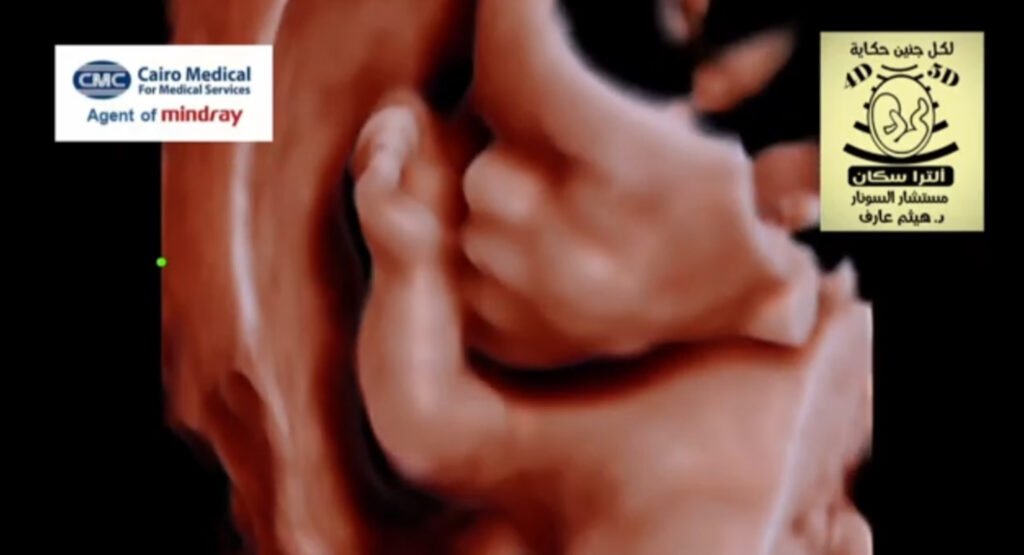

THANATOPHORIC DYSPLASIA TYPE I FETAL ULTRASOUND
Thanatophoric dysplasia type 1 (TD1) is a severe, usually lethal, genetic skeletal disorder causing extremely short limbs, a narrow chest, and a large head, diagnosed by bowed femurs (telephone-handle shape), flat vertebrae (platyspondyly), and respiratory failure after birth. Caused by mutations in the FGFR3 gene, infants often die from breathing problems shortly after delivery, though rare long-term survivors exist, differing from Type 2’s straight femurs and cloverleaf skull. Key Features of TD1:Skeletal Abnormalities: Severely short limbs (micromelia), bowed femurs, short ribs, narrow chest, flat vertebral bodies (platyspondyly).Craniofacial Features: Enlarged head (macrocephaly), large forehead (frontal bossing), prominent eyes, low nasal bridge, underdeveloped midface.Other Signs: Redundant skin folds on arms and legs, short fingers/toes (brachydactyly), low muscle tone (hypotonia). Cause & Genetics:Caused by de novo (new) mutations in the FGFR3 gene, inherited in an autosomal dominant pattern.It’s a spontaneous mutation, so the recurrence risk for parents is low.