

Anophthalmia fetal ultrasound
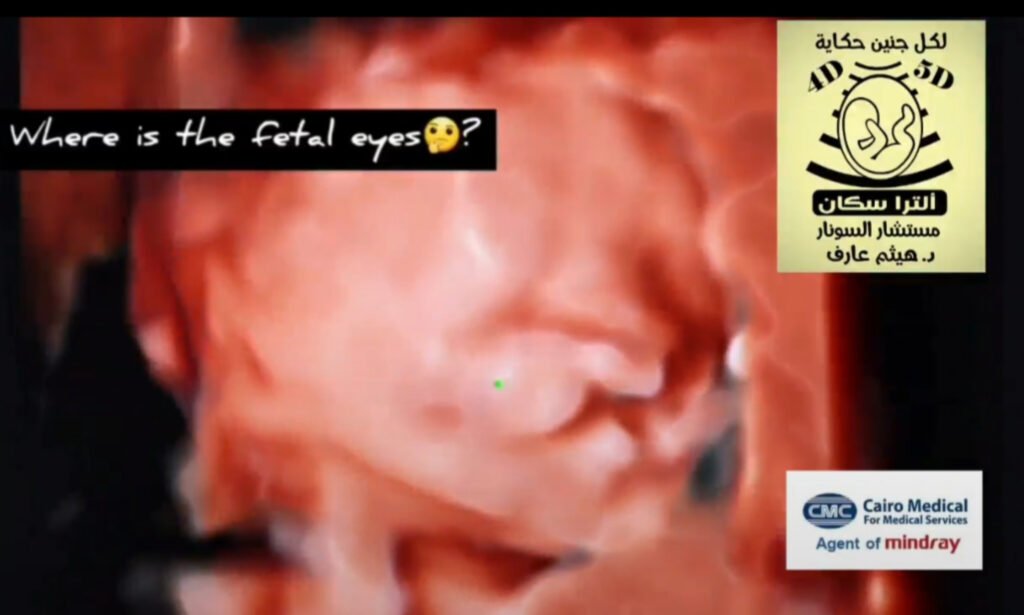
Prevalence:1 in 20,000 births.Ultrasound diagnosis:In microphthalmia there is decrease in the size of the eyeball and in anophtalmia there is absence of the eyeball, optic nerve and chiasma. Both can be unilateral or bilateral.Associated abnormalities:Chromosomal defects, mainly trisomy 13, are found in >50% of cases.Genetic syndromes are found in >50% of cases. The most common are Goldenhar syndrome (sporadic; anophthalmia, ear defects, facial cleft, facial macrosomia), Fraser syndrome (autosomal recessive; microphthalmia, facial cleft, tracheal atresia, bilateral renal agenesis, heart defects, syndactyly or polydactyly), Fryns syndrome (autosomal recessive; anophthalmia, facial cleft, micrognathia, ventriculomegaly, diaphragmatic hernia).Investigations:Detailed ultrasound examination, including neurosonography.Invasive testing for karyotyping and array.Fetal brain MRI for diagnosis of abnormalities such as absence of the optic nerve.Follow up:Standard follow-up in isolated cases. If there is an underlying syndrome antenatal care should be adjusted according to the risks of the condition.Delivery:Standard obstetric care and delivery.Prognosis:Isolated: good.Syndromic: very poor.Recurrence:Isolated: no increased risk.Part of trisomy 13: 1%.Part of an autosomal recessive condition: 25%.
